Polyaspartic vs. Epoxy: An Honest Side-by-Side
If you've researched floor coatings for more than ten minutes, you've hit this debate. Both are resin-based coatings applied over concrete — but they behave very differently once they're on your slab. Here's the honest breakdown we give customers.
Where polyaspartic wins
- Cure time — polyaspartic floors are typically done in one day and driven on the next; epoxy needs 3–7 days before vehicles.
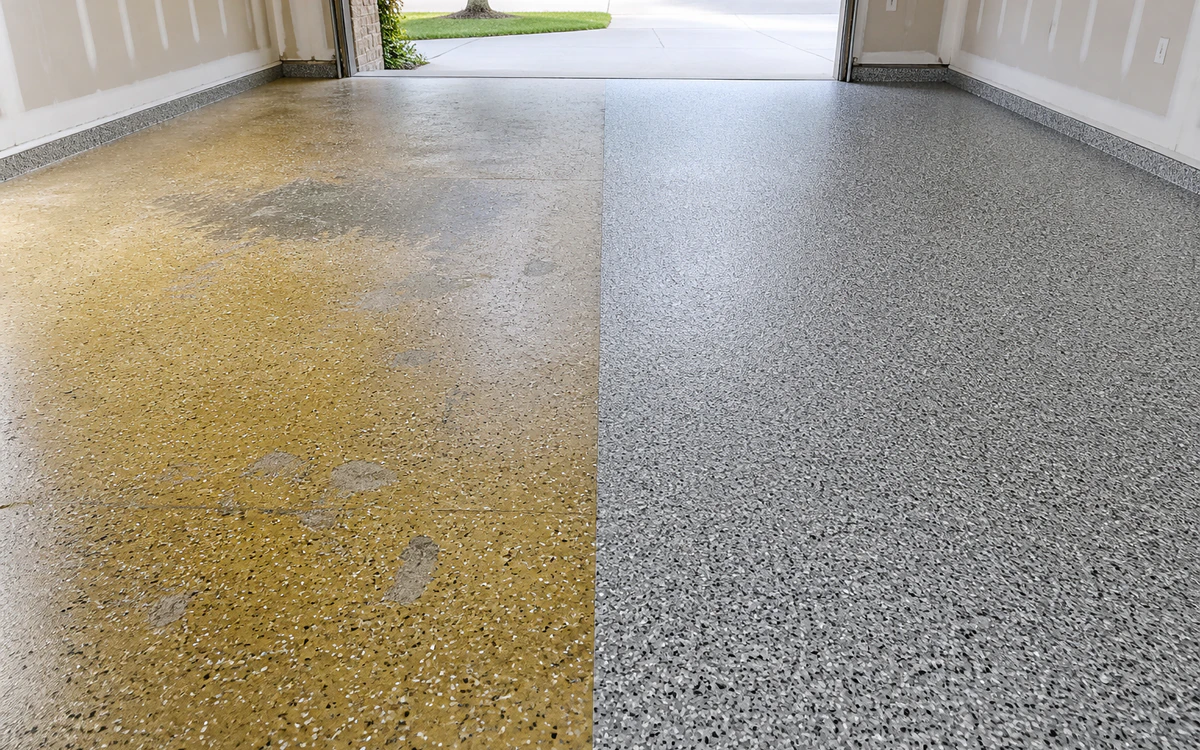
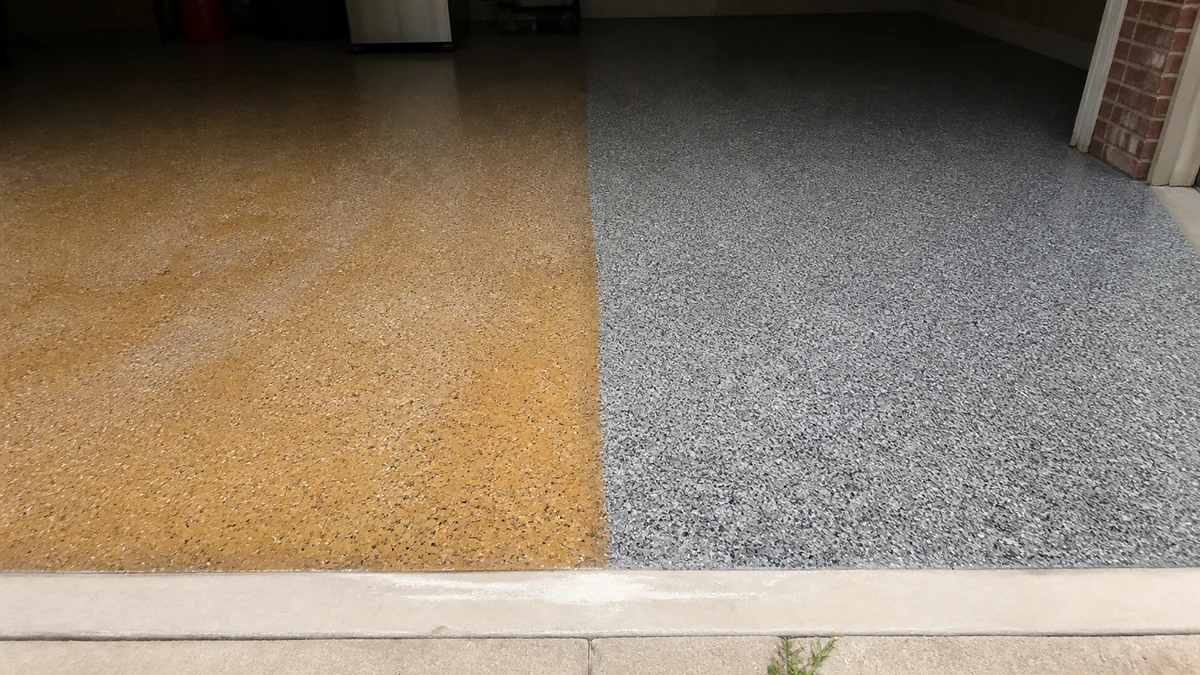
- UV stability — epoxy yellows and chalks in sunlight; polyaspartic is UV-stable, so patios and driveways stay true to color.
- Flexibility — polyaspartic flexes with your slab as Texas soil moves; epoxy is rigid and can crack with it.
- Hot-tire pickup — a classic epoxy failure point; polyaspartic is engineered to resist it.
- Strength — our polyaspartic systems are engineered to be up to 20x stronger than standard epoxy.
Where epoxy still makes sense
Fairness matters: for a purely indoor, low-traffic space on a tight budget, epoxy can be a reasonable short-term answer. The catch is lifespan — most epoxy floors need recoating within a few years, which quietly erases the savings.
The cost conversation
Epoxy usually wins on day-one price. Polyaspartic wins on cost-per-year: installed once, backed by a lifetime warranty, and no recoating cycles. Over a decade of ownership, the math almost always favors polyaspartic.
Epoxy is a coat of paint. Polyaspartic is a permanent finish.
Ready to see it on your floor?
Free on-site estimate. One-day install. Lifetime warranty.