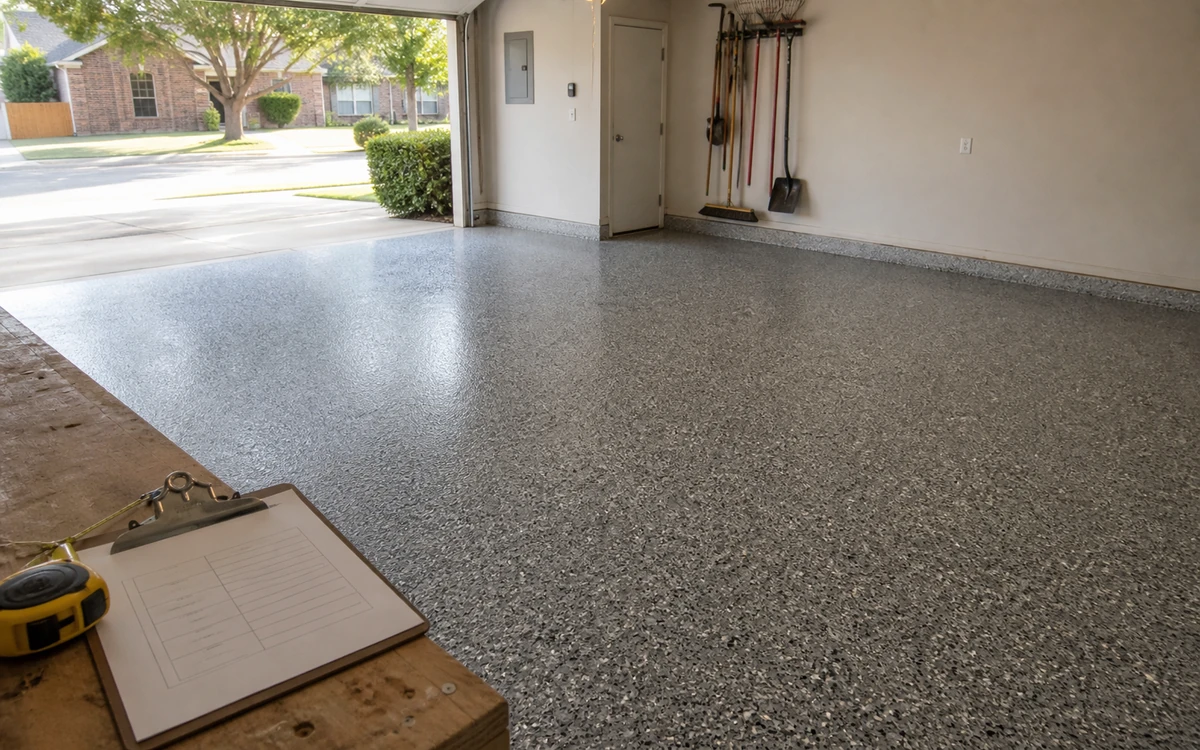
What Is Polyaspartic Flooring, Really? A Homeowner's Guide
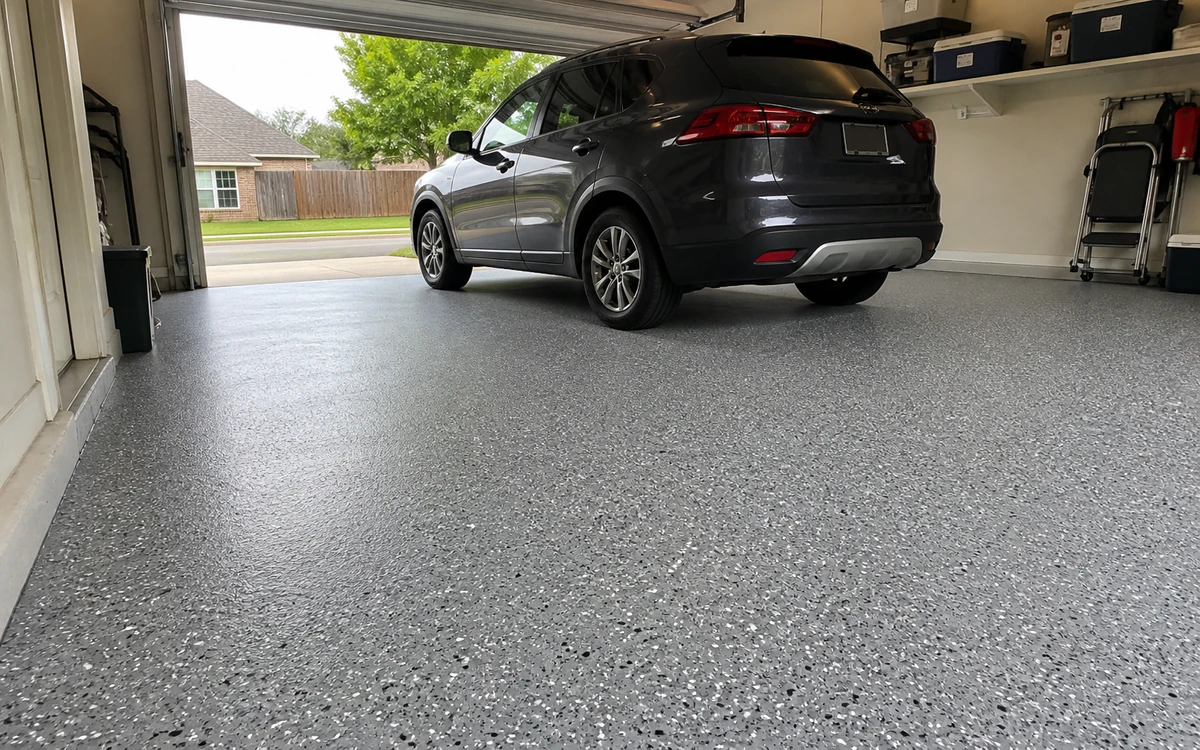
If a neighbor's garage went from stained gray slab to showroom floor seemingly overnight, you were probably looking at a polyaspartic floor coating. It's the fastest-growing category in residential flooring — and also one of the most misunderstood. This guide breaks down what it actually is, in plain language.
The 60-second answer
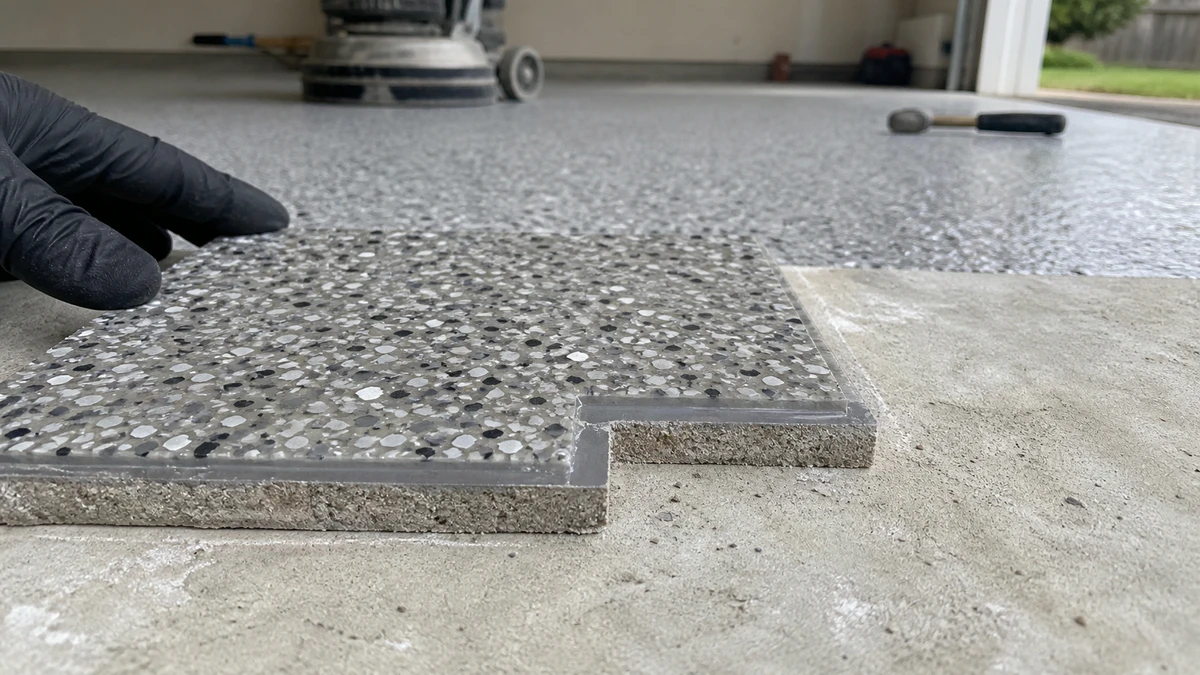
Polyaspartic is a high-performance protective coating that's bonded directly to your concrete. It belongs to the polyurea family — materials originally engineered for industrial uses like bridge decks and truck bed liners. Applied as a liquid, it soaks into the pores of the concrete and cures into a seamless, rock-hard surface that becomes part of the slab itself.
What's actually on your floor
- Base coat — a 100% solids polyaspartic layer that penetrates and locks into the concrete.
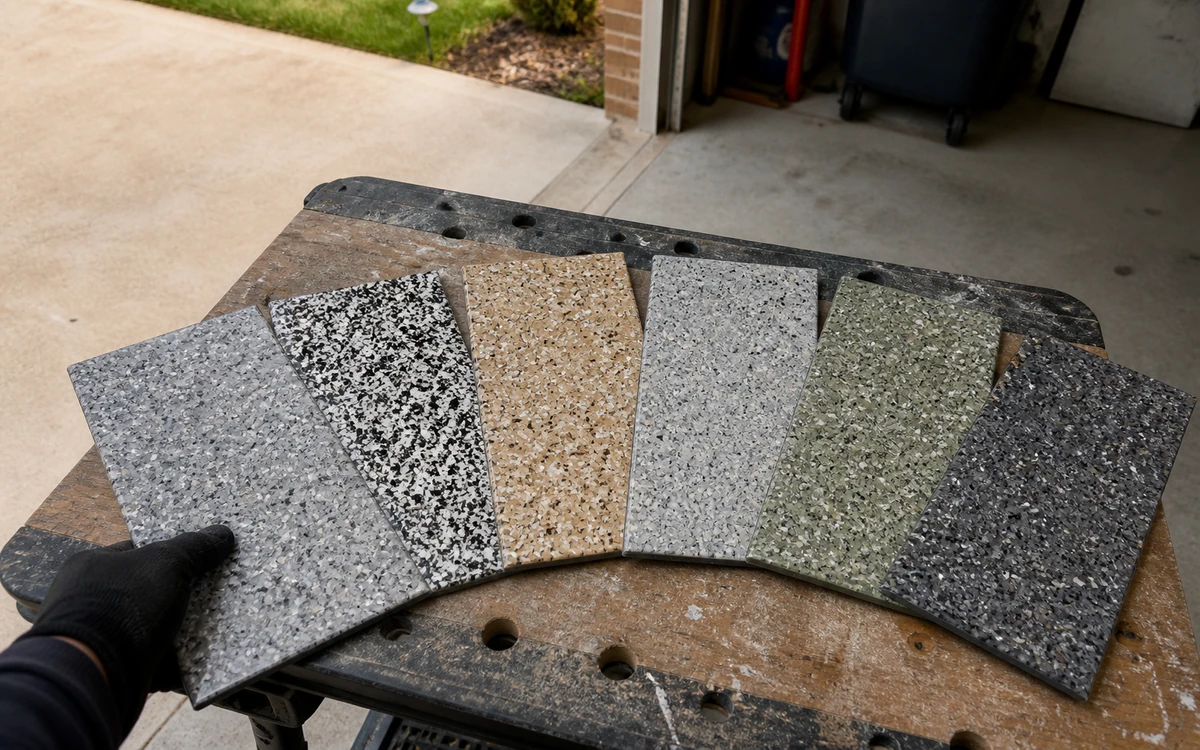
- Flake broadcast — decorative vinyl chips scattered across the wet base for color, texture, and slip resistance.
- Clear topcoat — a UV-stable, chemical-resistant seal that gives the floor its shine and its armor.
Why homeowners choose it over bare concrete or paint
Bare concrete dusts, stains, and cracks — and garage floor paint peels within a year or two. A professionally installed polyaspartic system solves all three at once: it's seamless so nothing soaks in, it's engineered to flex with your slab instead of cracking, and it's strong enough to shrug off hot tires, dropped tools, and Texas sun.
Think of it less like painting your floor and more like armoring it.
Ready to see it on your floor?
Free on-site estimate. One-day install. Lifetime warranty.